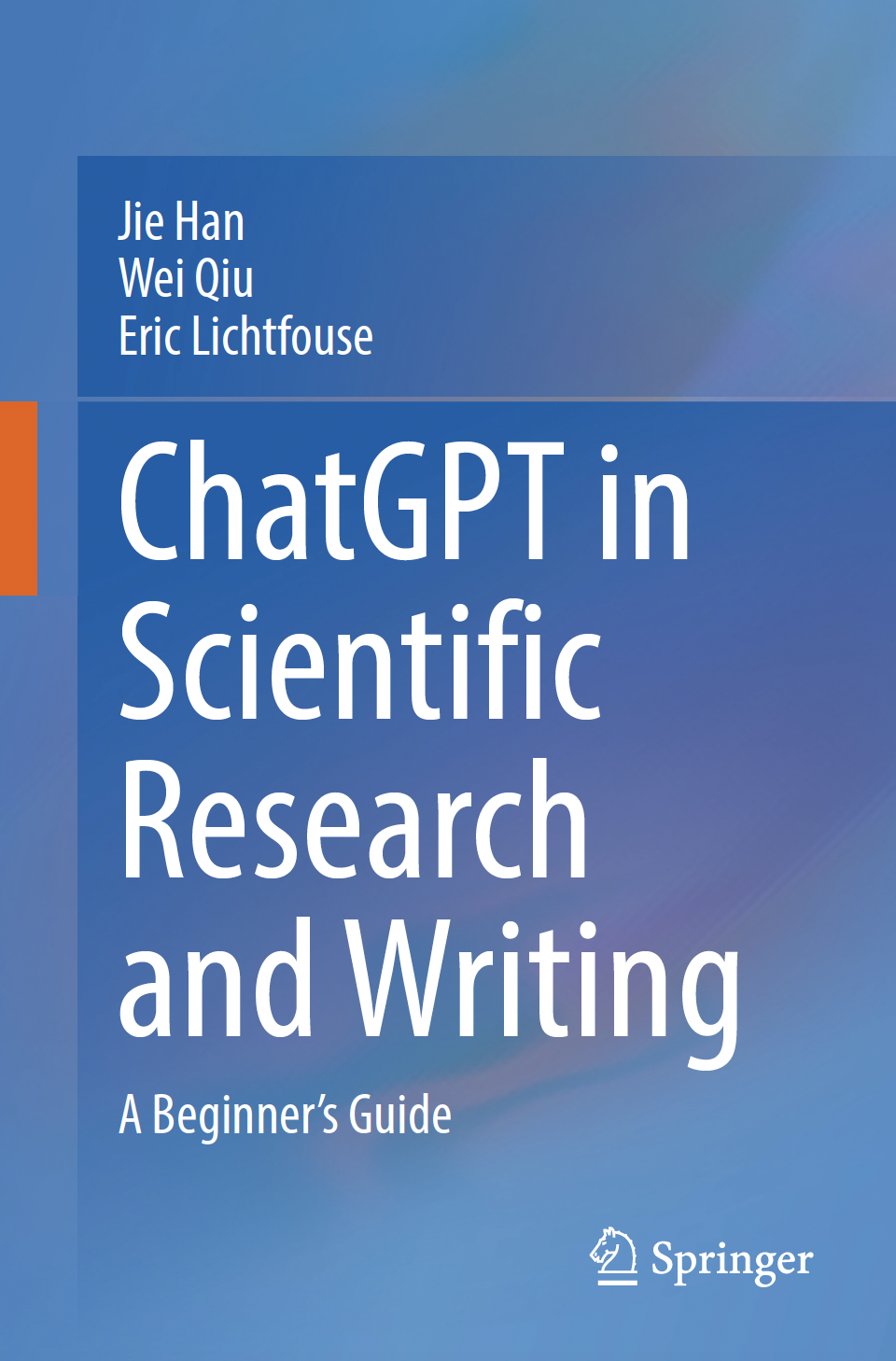
I’d like to share the main key take aways from this good book entitled “ChatGPT in Scientific Research and Writing: A Beginner’s Guide, published by Springer Nature (2024).
1/ This guide provides a comprehensive look at how LLMs like GPT-4 and Copilot are transforming the workflow of scientists, from conceptualization to public engagement.
2/ The authors demonstrate that AI can delve into the full text of research papers to extract key findings and methods in seconds. It can even summarize your own work more effectively and concisely than you might.
3/ LLMs aren’t just for text. The book shows how they can interpret complex hyperspectral images and data plots, correlating them to specific arguments within a paper—even when the original figure captions are sparse.
4/ AI is a powerhouse for language editing, helping non-native speakers reach professional standards. It can also “translate” dense jargon into magazine-style articles or social media posts for the general public.
5/ You can use LLMs to brainstorm research ideas, design step-by-step lab experiments (complete with reagent lists), and create meticulous 30-question survey questionnaires from scratch.
6/ The book highlights how researchers can use AI to prepare rebuttals to critical reviewers. LLMs can find supporting evidence and organize arguments in a compelling, neutral-sounding manner.
7/ The book highlights the potentials of AI:
- Drastic Productivity Boost: Tasks that take humans hours (like skimming 30 papers) take seconds.
- High Language Proficiency: The AI’s writing is often so polished it surpasses that of well-trained scientists.
- Contextual Intelligence: The model understands the intent behind requests, adapting its tone for students, peers, or the public.
8/ It also emphasizes some emerging issues:
- The Hallucination Problem: The model frequently fabricates facts, data, and bibliographic citations.
- Randomness: Identical prompts in different sessions can yield wildly different quality and content.
- Ignoring Supplementary Data: Currently, LLMs struggle to include supplementary material files in their analysis, even when provided with links.
- Broadness: AI comments are often relevant but broad and lack the targeted technical precision of a human expert.
9/ The authors stress the reality check. You must never follow AI-generated experimental designs or data without human validation and strict adherence to lab safety protocols.
10/ More details of the book: Han, J., Qiu, W., & Lichtfouse, E. (2024). ChatGPT in scientific research and writing: A beginner’s guide. Springer Nature. https://doi.org/10.1007/978-3-031-66940-8.
11/ Happy reading ^^
© mhsantosa (2026)
 Technology and Innovation in ELT