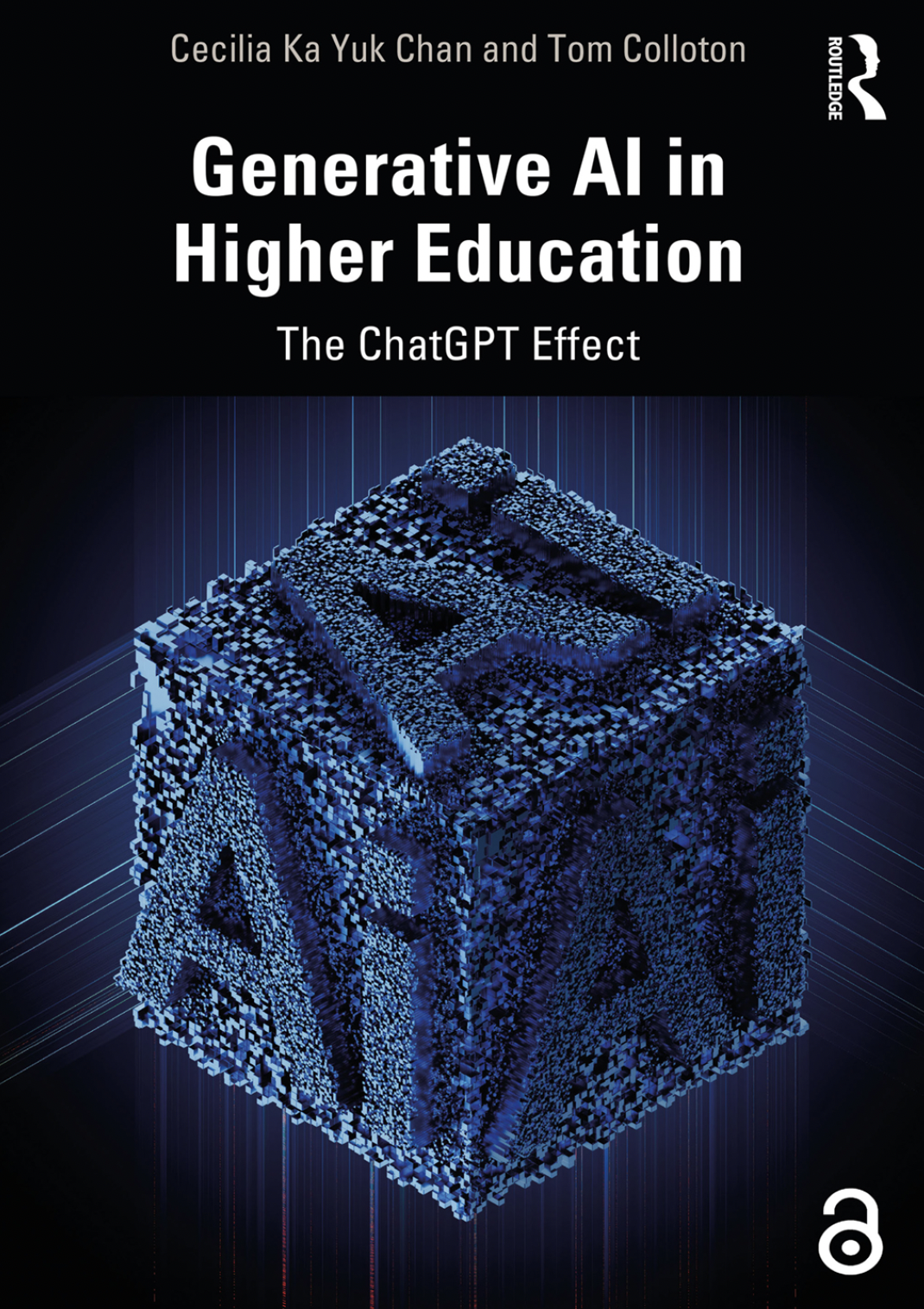
I’d like to share the main points from this book entitled “Generative AI in higher education: The ChatGPT effect.” (2024), published by Routledge.
1/ AI Literacy is the new foundational skill. The book defines AI literacy as the ability to comprehend, interact with, and make ethical decisions regarding AI technologies. It introduces the Dynamic AI Literacy Model (DAILM), which argues that while everyone needs a “foundational” understanding, specific professional roles (like teachers or medical doctors) require tailored levels of literacy.
2/ Assessment must shift from product to process. Traditional high-stakes exams are increasingly vulnerable to AI. The authors propose the Six Assessment Redesign Pivotal Strategies (SARPS), advocating for a shift toward authentic assessments that mimic real-world challenges and prioritize feedback and metacognitive reflection over simple grades.
3/ The AI Assessment Integration Framework. To help educators adapt, the book provides nine distinct assessment types. These include performance-based tasks, human-centric competency evaluations (like empathy in healthcare), and human-machine partnership assessments where students are graded on how effectively they collaborate with AI tools.
4/ Policy requires an “Ecological” approach. Creating a university AI policy isn’t just about banning or allowing tools. The AI Ecological Education Policy Framework focuses on three dimensions: Governance (senior management setting ethical standards), Operational (IT staff providing training), and Pedagogical (teachers rethinking curriculum).
5/ AI as a Learning Partner, not a replacement. A recurring theme is that AI should “co-pilot,” not replace, the human touch in education. While AI can automate grading and content generation, human mentorship remains essential for developing holistic competencies like leadership, ethics, and critical thinking.
6/ The technical “Black Box” demystified. For those curious about the magic, the book provides a deep dive into the history of neural networks and the mechanics of Large Language Models (LLMs). It explains how processes like tokenization, embeddings, and attention mechanisms allow models like ChatGPT to predict the next word in a sequence.
7/ The Future is “Smart” but necessitates adaptability. AI adoption in education is predicted to mirror the rapid rise of smartphones, eventually becoming a social norm. Graduates will need to be prepared for new roles, such as AI Ethicists or AI Personality Designers, as the knowledge economy shifts.
8/ A major highlight of the book is its immediate utility; it provides “try-it-out” prompts, specific rubrics for AI assessments, and a step-by-step blueprint for drafting institutional AI policies.
9/ By pairing an education expert with an enterprise architect, the book successfully bridges the gap between pedagogical research and technical engineering.
10/ It offers diverse case scenarios spanning architecture, philosophy, English studies, and medicine, while providing a comprehensive list of 20 specific weaknesses and threats to academic integrity and society.
11/ Because Generative AI is such a recent phenomenon, much of the book’s discussion on learning outcomes is based on early adoption trends and predictions rather than multi-year longitudinal studies.
12/ The authors acknowledge that exactly how neural networks store experiences and achieve emergent behaviors is still “somewhat enigmatic” or like “magic” even to experts.
13/ While the book identifies inequitable access as a threat, it focuses more on institutional policy than on solving the broader socio-economic gaps for students in technologically underserved regions.
14/ Although multilingual support is discussed, many of the primary NLU (Natural Language Understanding) benchmarks used to test models remain heavily focused on English language performance.
15/ More details of the book: Chan, C. K. Y., & Colloton, T. (2024). Generative AI in higher education: The ChatGPT effect. Routledge. https://doi.org/10.4324/9781003459026.
16/ The book is available as an Open Access version funded by The University of Hong Kong. Additional resources related to the book’s themes, such as assessment guidebooks and infographics on GenAI, can be found at the authors’ dedicated website: https://aied.talic.hku.hk/.
17/ Happy reading ^^
(c) mhsantosa (2026)
 Technology and Innovation in ELT