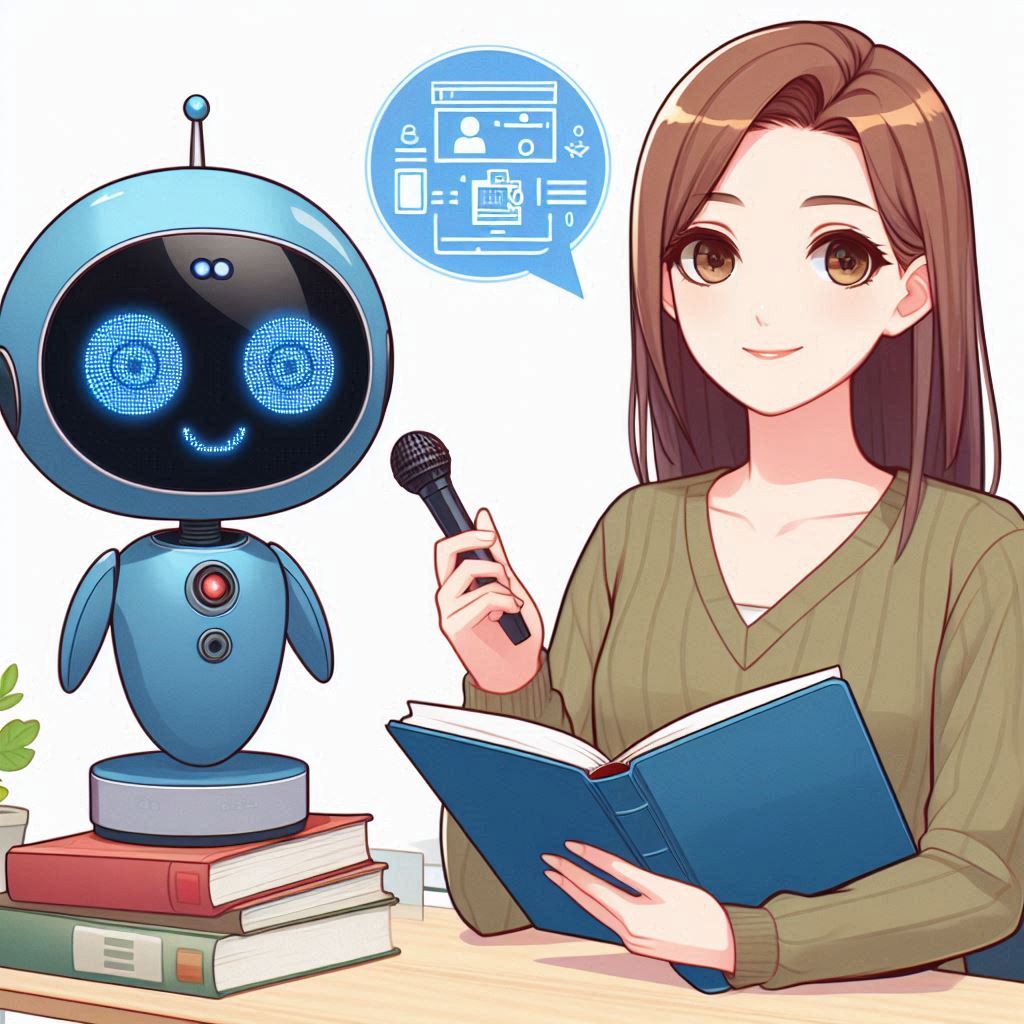
Nowadays, AI, especially generative AI, has been advancing rapidly in many sectors, including education, especially English Language Teaching (ELT). Gemini is a new AI-powered assistant designed to be versatile and support various tasks, including language teaching. In English Language Teaching (ELT), Gemini can be leveraged to provide interactive, adaptive, and personalized learning experiences for students, especially in areas where teachers face resources and internet connectivity challenges. The tool can offer text-based explanations, create exercises, and answer student questions in real time, making it a useful supplement to traditional methods. Now, if you want to utilize Gemini (not only ChatGPT), you need to consider its advantages in the educational context, in this case, English Language Teaching (ELT).
Advantages of Gemini AI in ELT
- Personalized Learning: Gemini is appropriate for diversified training in classrooms with mixed ability levels, since it can customize activities and explanations according to the learner’s level. This is especially helpful in places with little resources or remote locations where students may not speak English as their first language.
- Accessibility: Gemini doesn’t require high-speed internet to be operated on low-end devices because of its text-based interface. This is crucial for Indonesia’s isolated regions, where internet service can occasionally be patchy or erratic.
- On-Demand Learning: With Gemini, students can ask questions and receive prompt responses, providing a kind of personalized instruction that might not always be possible in classrooms with high teacher-to-student ratios.
- Interactive Activities: Using the application, teachers can create tests, reading comprehension, and vocabulary-building activities that will allow students to practice and receive instant feedback.
Disadvantages of Gemini AI in ELT
- Limited Interaction Types: While Gemini can handle text-based questions and exercises well, it cannot engage in more complex interactions such as listening and speaking exercises. In remote Indonesian areas, this may limit its utility where developing oral skills is a primary focus.
- Dependence on Basic Connectivity: Although Gemini can function on limited bandwidth, it still requires some level of internet connectivity. Completely offline regions would not benefit from its features.
- Teacher Reliance: Teachers may still need to guide students on how to effectively use the tool, which could be an additional challenge in areas where teacher training is limited.
- Cultural and Contextual Relevance: The content generated by Gemini might sometimes be out of touch with local cultural nuances or the specific learning needs of Indonesian students, requiring teachers to adapt it accordingly.
Having these advantages and disadvantages of using Gemini AI in ELT, I tried to develop a simple lesson plan for using the AI tool in remote areas in the Indonesian context. I used ChatGPT to help me craft the ideas, and I tried to improve where necessary.
Simple Lesson Plan Using Gemini in a Remote Indonesian Context
Lesson Title: Vocabulary Building through Descriptive Writing
Target Group: Elementary-level English learners (Grade 5-6) in remote areas
Time: 45 minutes
Objective: By the end of the lesson, students will be able to describe their surroundings using simple English vocabulary.
Materials Needed:
- Basic tablets or smartphones with Gemini access
- Printed handouts (for areas with very low connectivity)
- Pictures of local environments (e.g., mountains, villages, markets)
Lesson Procedure:
1. Warm-up (10 minutes):
- Show students pictures of different local scenes (mountains, markets, rivers, etc.). Ask them to identify these objects in their native language (Bahasa Indonesia or local language).
- Then, use Gemini to ask for the English translation of these objects (e.g., “What is ‘gunung’ in English?” → ‘Mountain’). Write the English words on the board and repeat them with the students.
2. Main Activity (25 minutes):
Part A: Vocabulary Input (10 minutes)
- Have Gemini list simple adjectives and nouns that students can use to describe these scenes (e.g., big, small, beautiful, house, tree, river).
- Review these words as a class by writing them on the board and practicing pronunciation.
Part B: Descriptive Writing (15 minutes)
- Ask students to write a short description (2-3 sentences) of their village using the vocabulary from the lesson.
Example: “My village has a big river and small houses. There are many trees around.” - For students with access to Gemini, they can ask for spelling or additional vocabulary as they write.
- Teachers can walk around and assist students who are struggling, or students can ask Gemini for further clarification if available.
3. Sharing and Feedback (10 minutes):
- Invite a few students to read their descriptions aloud.
- Use Gemini to provide feedback on the grammatical correctness of each description.
- Correct common mistakes together as a class, such as subject-verb agreement or missing articles (e.g., “a big river” instead of “big river”).
Exercises and Key Answers:
Exercise 1: Matching Vocabulary
Match the Indonesian word to its English translation:
- Gunung – _______
- Rumah – _______
- Pohon – _______
- Sungai – _______
- Pasar – _______
Answer Key:
- Mountain
- House
- Tree
- River
- Market
Exercise 2: Sentence Construction
Fill in the blanks with the correct word from the box (big, small, beautiful, tree, river).
- My village has a _____ river.
- There is a _____ near my house.
- The market is _____ but crowded.
- I have a _____ house in the village.
- The mountain is very _____.
Answer Key:
- big
- tree
- small
- small
- beautiful
As you can see above, the use of Gemini can still be done with very limited use regarding internet connectivity. But you can see that the use of context—shown in vocabulary lists—is obvious here. As teachers, we know that pedagogy is very important, and we need to think of how to utilize the tool in a specific situation, like in remote areas. From my personal journey, Indonesia still has a lot of remote areas with very limited, even no internet connections. So, even with the rapid advancement of technology like Gemini and the like, teachers need to upgrade their competencies all the time and focus on the pedagogical competencies greatly. Added with technological competence and subject understanding, the teaching can be directed to assist effective learning. Gemini can be a valuable tool in supporting English language teaching in remote Indonesian areas, offering personalized and interactive learning experiences. However, its limitations in terms of interactivity and cultural relevance mean that it should be used alongside other teaching methods and adapted to local needs. In regions with limited access to resources, a blend of traditional methods and AI-powered tools like Gemini can enrich the learning experience.
What do you think? Share in the comment section okay? ^^
Pic Source: Personal Copilot Generated Image
@mhsantosa (2024)
 Technology and Innovation in ELT