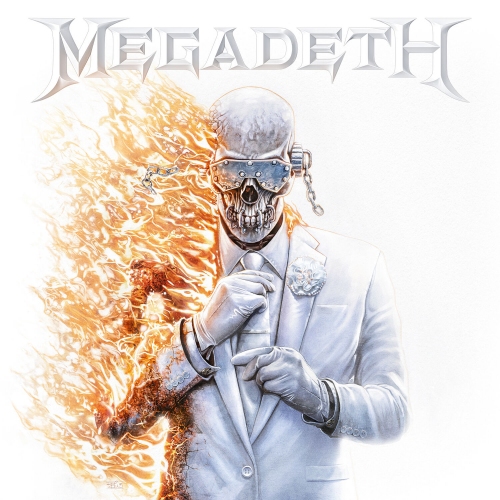
Megadeth’s 2026 self-titled “White Album” marks the definitive end of an era, serving as a complex, 17th studio “swan song” for a band that defined the thrash metal genre. As a final statement, the album is a high-octane retrospective that captures the technical brilliance the band is known for, while also showing the inevitable wear and tear of a forty-year career.
From a technical standpoint, the album is a masterclass in instrumentation. The addition of guitarist Teemu Mäntysaari has injected a fresh, clinical precision into the lead work, perfectly complementing Dave Mustaine’s signature rhythmic snarl. Tracks like “Tipping Point” and “Made to Kill” prove that the band hasn’t lost its ability to craft relentless, high-speed thrash. Dirk Verbeuren’s drumming remains an absolute powerhouse, providing an airtight foundation that allows the dual-guitar attack to shine.
However, the album is not without its flaws. Critics have pointed out that Mustaine’s vocals, while iconic, show significant signs of aging, with a reduced range that sometimes struggles to match the intensity of the music. Additionally, while the mid-tempo grooves provide a nod to the 90s era, some listeners find the middle section of the record a bit monotonous, lacking the “bite” found in recent triumphs like Dystopia. The lyrical content also fluctuates, ranging from poignant reflections on legacy to tracks like “I Don’t Care,” which some have dismissed as overly simplistic.
The most polarizing moment is undoubtedly the cover of “Ride the Lightning.” By “reclaiming” a track he co-wrote decades ago, Mustaine has created a full-circle moment that feels like a poetic closing of the book, even if it risks overshadowing the new material for some.
On a personal level, this final chapter hits home. Having followed Megadeth from their very first album, witnessing their evolution—and occasionally their volatility—has been a lifelong journey. The emotional weight of this “farewell” is amplified by memories of seeing them live in Melbourne back in 2009 (link). That performance was a bucket-list moment; seeing Mustaine and the lineup command the stage in Australia fulfilled a long-held dream and solidified my loyalty to the Cyber Army.
While the 2026 album may not surpass the untouchable heights of Rust in Peace, it is a dignified and powerful exit. It’s an album for the fans—a final, loud “thank you” that honors the past while finally letting the engine rest. Visit their website to know more about news and tour.
(c) mhsantosa (2026)
 Technology and Innovation in ELT