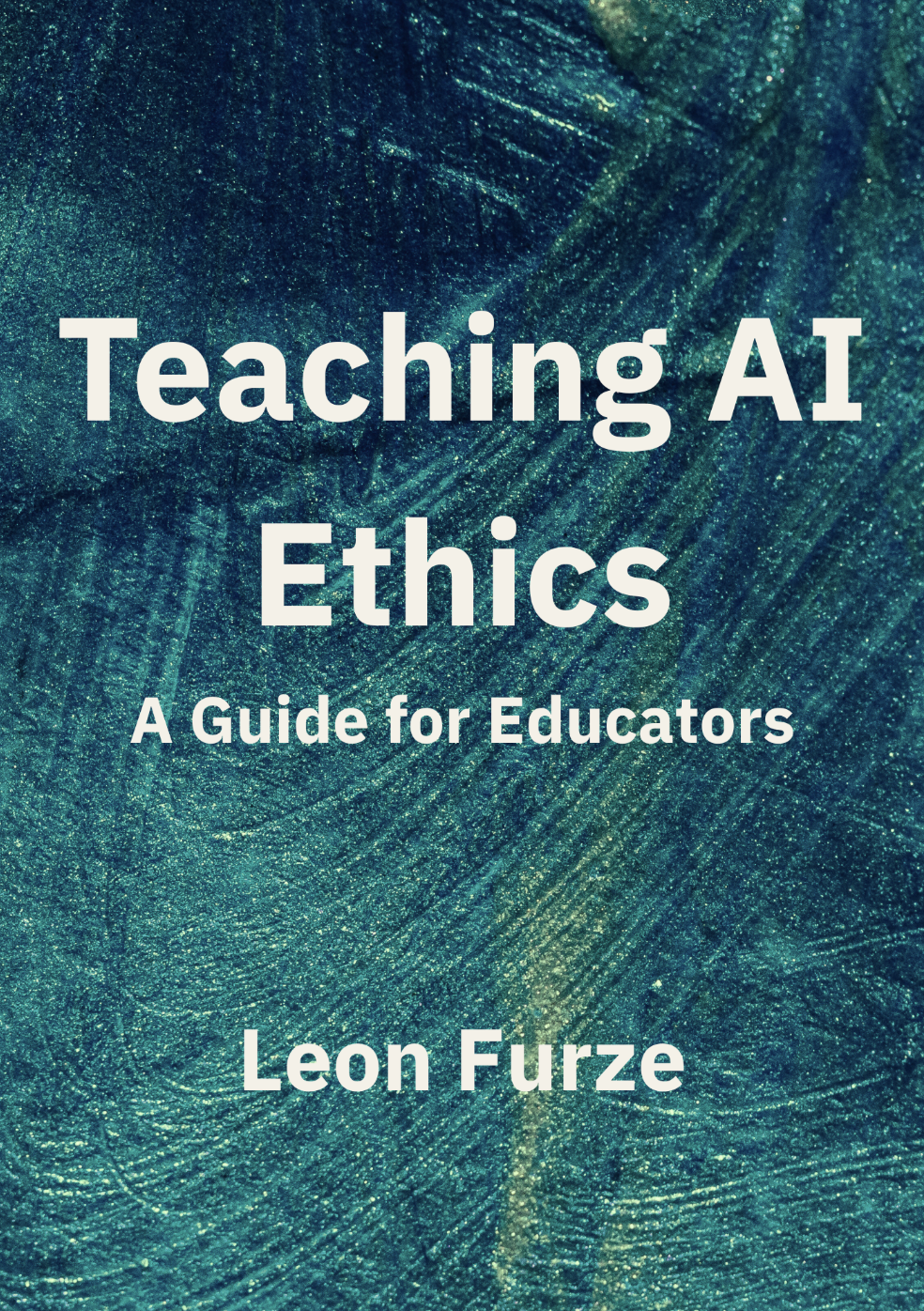
With the rise of AI today, ethics can be one important aspect in the instructional process that needs attention. Let me share some important key takeaways from Furze’s Open Access Book, entitled Teaching AI Ethics: A Guide for Educators, by Furze (2026).
1/ AI ethics education is no longer optional. In his book Teaching AI Ethics, Leon Furze argues that because generative AI is now ubiquitous, teaching its ethical implications is a critical classroom priority. Here is a breakdown of the key takeaways for educators.
2/ Bias is a feature, not a bug. AI bias isn’t just about the data; it happens in three layers: data bias (imbalanced internet scrapes), model bias (how the AI interprets patterns), and human bias (how people label the data). Guardrails are often just band-aids over these deep-rooted issues.
3/ The environmental cost is heavy. AI is an extractive technology. Beyond just electricity, it relies on massive amounts of water for cooling and the mining of rare minerals for hardware. Furze notes that data centers already consume 3-4% of all US energy.
4/ Truth is statistical, not factual. Large Language Models are designed for probability, not accuracy. They make sense, not words, meaning hallucinations are a core feature of how they work. Instead of just catching cheaters, we need to move toward post-plagiarism—a framework where hybrid human-AI writing is the norm.
5/ The invisible human workforce. Behind the cloud lies a global workforce. Workers in countries like Kenya and Venezuela often earn as little as $1-$2 per hour to label data and filter out traumatic content (like violence and abuse) to make models safe for us.
6/ Power is concentrated. A handful of tech giants (OpenAI, Microsoft, Google, Meta, Amazon, and Anthropic) control almost all AI development. This creates a hegemony where private companies have more resources than some nation-states and are now writing the policies that govern them.
7/ The book provides practical, subject-specific questions for every discipline, from Math to Visual Arts. It doesn’t just theorize; it offers a roadmap for teachers to integrate these heavy topics into existing curricula without needing a separate AI class.
8/ However, the author admits this is a limited list due to the technology’s complexity. While it highlights the privacy illusion of chatbots, it provides fewer technical deep-dives for educators on how to set up the local, offline models it mentions as a safer alternative.
9/ Read more: Furze, L. (2026). Teaching AI ethics: A guide for educators (1st ed.). Leon Furze. https://leonfurze.com/2026/02/09/teaching-ai-ethics-new-book-and-website/
10/ Happy reading ^^
© mhsantosa (2026)
 Technology and Innovation in ELT