AI in Language Learning
The integration of Artificial Intelligence (AI) into language learning marks a pivotal moment in educational innovation. From intelligent tutoring systems to real-time translation tools, AI is revolutionizing the ways in which learners engage with languages. By offering adaptive learning environments, instant feedback mechanisms, and immersive experiences—such as those powered by Virtual Reality (VR) and Augmented Reality (AR)—AI holds the potential to transform language acquisition into a more personalized, interactive, and efficient process.
However, the same technologies that present immense promise also bring forth critical ethical challenges. The deployment of AI in language learning raises concerns around data privacy, algorithmic bias, transparency, and the potential misuse of these tools. As the application of AI becomes increasingly prevalent in classrooms and self-directed learning environments, ethical considerations must become an integral part of its development and implementation. This essay explores the benefits, risks, and ethical frameworks that shape the responsible use of AI in language learning, aiming to establish a foundation for future practices that are both innovative and ethically sound.
Potential Benefits and Ethical Promises of AI in Language Learning
Personalization
One of the most significant contributions of AI to language learning is its ability to personalize educational content. AI-driven platforms such as Duolingo and Babbel tailor lessons to suit individual learners’ pace, proficiency level, and learning preferences. This adaptability enables more effective language acquisition, particularly for students who may struggle with traditional, one-size-fits-all instruction. Personalized learning not only improves retention but also fosters a greater sense of autonomy and engagement.
Accessibility
AI also opens new possibilities for making language learning more inclusive. For students with disabilities, such as those who are deaf or have learning difficulties, AI-powered tools can offer tailored support. For instance, real-time captioning, sign language avatars, and visual learning aids can bridge communication gaps. Furthermore, AI can provide voice-to-text or text-to-voice functionality for students with speech or auditory impairments, thereby supporting a more equitable learning environment.
Efficiency
AI can automate administrative and repetitive tasks, allowing educators to focus on high-value activities such as mentoring and curriculum design. Grading essays, tracking student progress, and generating quizzes can all be efficiently managed by AI systems. This not only saves time but also enhances the accuracy and consistency of assessments. In turn, teachers are empowered to devote more attention to student interaction, creativity, and critical thinking.
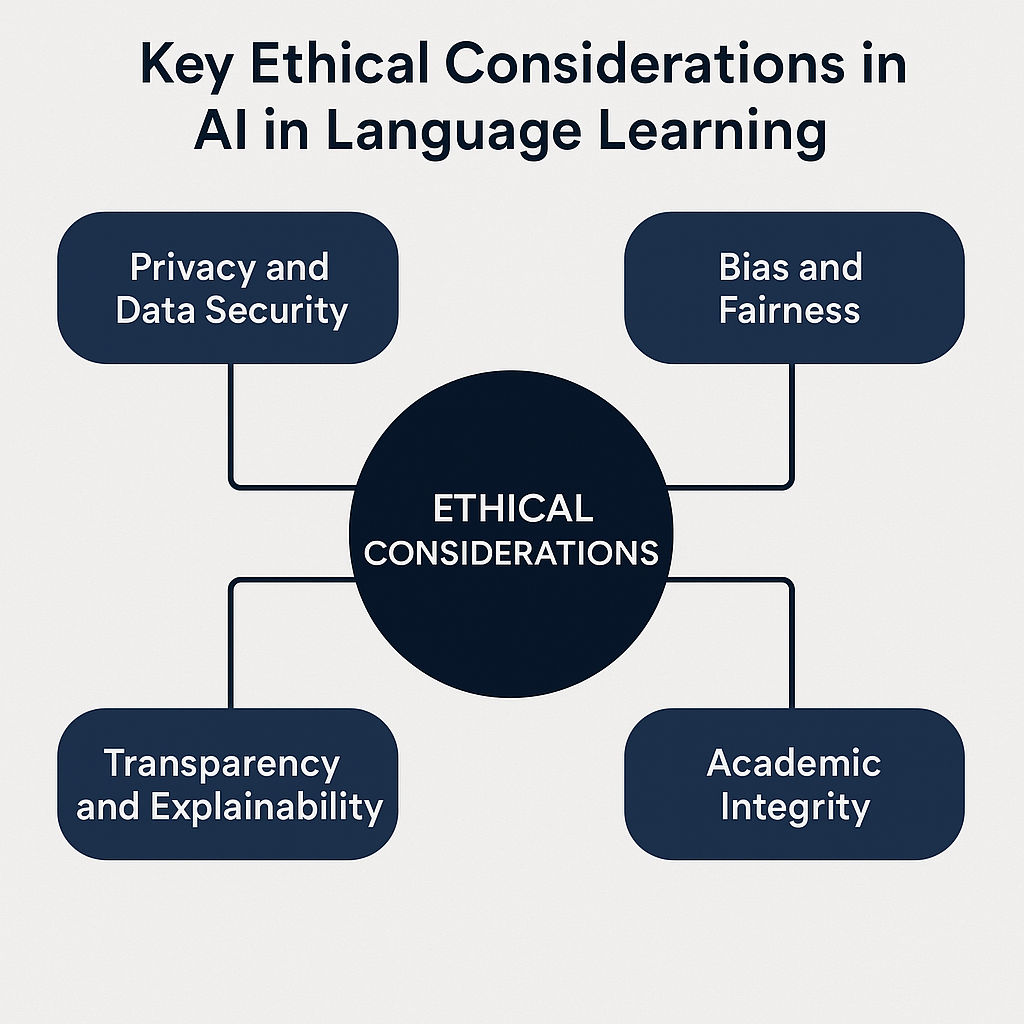
Key Ethical Considerations in AI Deployment
Privacy and Data Security
Perhaps the most pressing ethical issue in AI-based language learning is the handling of personal data. AI systems often collect vast amounts of user information, including behavioral data, learning progress, and even biometric data in cases involving voice recognition or facial tracking. Without stringent data protection measures, this information can be vulnerable to misuse or unauthorized access. Learners, particularly minors, are at heightened risk if platforms do not adhere to strict privacy regulations such as the General Data Protection Regulation (GDPR). Ethical deployment of AI necessitates transparent data policies, informed consent, and secure data storage practices.
Bias and Fairness
AI algorithms are only as fair as the data used to train them. When datasets are biased—reflecting predominantly Western, native-English-speaking perspectives—they can inadvertently reinforce existing social inequalities. For example, AI systems may fail to recognize or appropriately score non-native accents, leading to unfair assessments of speaking proficiency. Similarly, culturally biased examples or exercises may alienate learners from different backgrounds. Ensuring fairness in AI requires proactive auditing of datasets and algorithms to detect and eliminate biases that affect gender, race, language, and cultural identity.
Transparency and Explainability
Another critical ethical dimension is the need for transparency and explainability in AI systems. Learners and educators must understand how AI tools arrive at decisions, such as assigning a score or suggesting a learning path. Without this clarity, users may develop misplaced trust in the technology or feel disempowered when errors occur. Explainable AI (XAI) aims to address this concern by making AI’s internal logic accessible to non-experts. This transparency fosters trust, accountability, and informed use.
Academic Integrity
The rise of generative AI tools and intelligent language assistants poses significant challenges to academic integrity. While these tools can enhance learning by providing feedback or explanations, they can also be misused by students to bypass genuine effort. For example, learners might rely on AI to write essays, complete comprehension tasks, or translate texts without truly engaging with the material. Such practices not only undermine the learning process but also complicate the accurate assessment of students’ language proficiency. Educators must establish clear guidelines on the appropriate use of AI, incorporating AI literacy and ethical use policies into their instruction. At the same time, assessments must be redesigned to emphasize creativity, critical thinking, and oral performance—areas less susceptible to AI-enabled dishonesty. Upholding academic integrity in the age of AI requires a collaborative effort among educators, students, and technology providers to set ethical norms and ensure meaningful learning experiences.
Examples of Misuse of AI in Language Learning
Invasive Tracking
In some cases, AI tools have crossed the line between helpful and invasive. Language learning applications that track facial expressions, voice intonation, or even emotional states may offer enhanced feedback—but they also raise serious privacy issues. If such data is collected without explicit, informed consent or is used beyond the stated educational purpose, it constitutes a breach of ethical practice. The potential for surveillance-like behavior within educational technology must be critically examined and regulated.
Cheating and Dependency
The accessibility of AI-based language generators and translation tools presents another ethical dilemma. Students may become overly reliant on AI to complete assignments, bypassing the cognitive engagement necessary for real language development. Tools like ChatGPT can generate essays or responses that appear sophisticated but may not reflect the learner’s actual proficiency. This undermines the learning process and complicates assessment integrity. Educators need to design assessments and learning activities that encourage critical thinking and genuine interaction with the language.
Cultural Bias
Language is deeply tied to culture, and AI tools that fail to account for cultural diversity may inadvertently perpetuate stereotypes. For instance, language exercises that consistently depict Western-centric contexts or gender roles can marginalize learners from different cultural backgrounds. Moreover, idiomatic expressions or culturally specific references may be misunderstood or misused, leading to confusion. Ethical AI development must include cultural sensitivity and inclusivity as core design principles.
Examples of AI Tools Supporting Language Learning
AI technologies, when used responsibly, have proven highly effective in supporting language learners:
- Language Modeling Tools like Duolingo and Babbel employ AI to adapt lessons to individual learners, using gamification to increase motivation and retention.
- Voice Recognition Software such as Rosetta Stone analyzes pronunciation and provides real-time corrective feedback, allowing for self-paced improvement in speaking skills.
- Real-Time Translation Tools like Google Translate and DeepL assist learners in understanding unfamiliar texts, bridging language gaps in multilingual environments. While these tools should be used cautiously, they serve as valuable aids for comprehension and vocabulary building.
Case Studies in Language Learning with AI
Adaptive Learning Systems
In inclusive classrooms, AI tools have enabled differentiated instruction by adapting to various skill levels within a single class. For instance, platforms like LingQ and Speakly adjust difficulty levels and suggest content based on individual progress. This fosters engagement among all students, including those with special educational needs. In Indonesia, for example, pilot projects involving AI-driven platforms have shown promise in remote and inclusive schools where traditional resources are limited.
AI Tutors for Practice
Conversational AI bots, such as those embedded in platforms like Replika or ChatGPT, offer learners opportunities to practice language in real-time. These bots simulate natural dialogue, adapting to learners’ vocabulary and syntax levels. Such practice enhances fluency and builds confidence, particularly for students who may be shy or lack access to native speakers.
AI in Language Assessment
Automated language assessment tools can evaluate fluency, pronunciation, grammar, and comprehension with increasing accuracy. For example, the Pearson English Test employs AI to deliver scalable, objective assessments. These systems can offer immediate, detailed feedback, allowing learners to identify areas for improvement and track their progress over time.
Ethical Frameworks and Guidelines
To ensure that AI serves as a force for good in language learning, several ethical frameworks have been proposed. Key principles include:
- Transparency: Systems must clearly communicate how data is used and how decisions are made.
- Privacy: Data collection should be minimized, and user consent must be obtained explicitly.
- Inclusivity: AI tools should accommodate diverse linguistic, cultural, and cognitive backgrounds.
- Accountability: Developers and educators must share responsibility for the ethical deployment of AI tools.
Practical steps include creating robust data governance policies, implementing user-centric design, and conducting ethical impact assessments before deploying AI tools. Educators should also receive training to understand and monitor the ethical implications of the technologies they use.
Building a Responsible Future for AI in Language Learning
The future of AI in language learning is filled with potential—but also fraught with responsibility. While AI can enhance personalization, accessibility, and efficiency, these benefits must not come at the cost of privacy, fairness, or cultural sensitivity. Educators, technologists, and policymakers must work collaboratively to design and implement AI tools that uphold ethical standards and genuinely support the learning process.
Building a responsible future requires transparency in AI operations, careful management of learner data, and inclusive design practices that reflect the global diversity of language learners. By embedding ethical considerations into the very fabric of AI development, we can ensure that technology serves as a bridge rather than a barrier—connecting people, languages, and cultures in an equitable and empowering way.
©mhsantosa 2025
 Technology and Innovation in ELT